





Day in the Life of a Cybersecurity Analyst Defending a Mid-Sized Enterprise
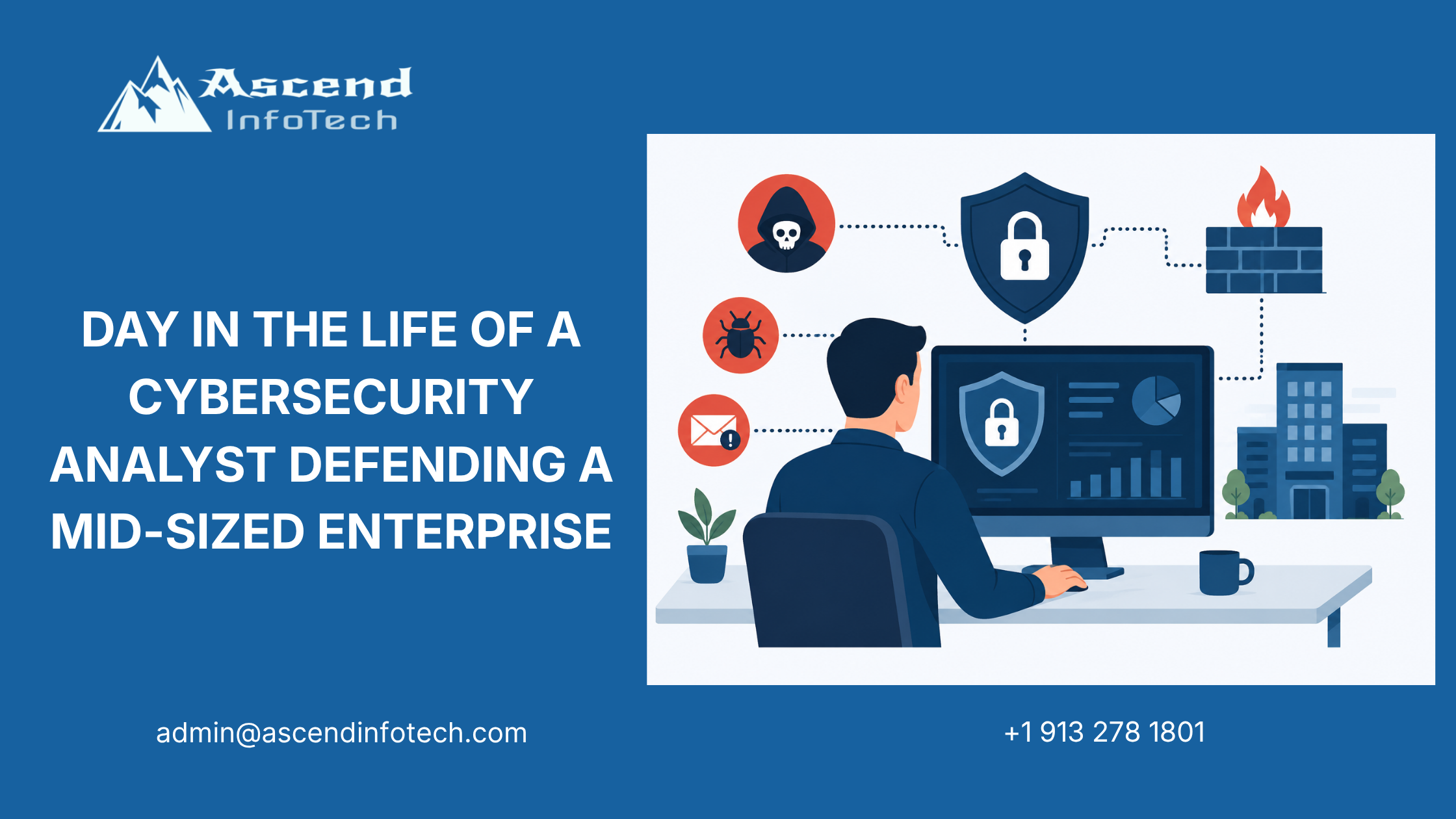
At 8:00 AM, Nisha opens her security dashboard and sees a flood of alerts waiting from overnight. A login attempt from an unusual location, a suspicious email reported by an employee, and a device that may be talking to a known malicious domain all need attention before the morning meeting. This cybersecurity analyst day in the life begins with triage and ends with a tabletop exercise that tests whether the client’s team can respond under pressure.
Nisha works with a regulated-industry client that cannot afford to treat security as an afterthought. Her role is to monitor alerts, investigate suspicious activity, and help the IT team stay prepared for incidents. The work is fast, repetitive, and high stakes, because small issues can become major breaches if they are ignored.
Morning Alert Triage
Reviewing the SIEM queue
Nisha starts in the SIEM platform, where alerts are grouped by severity and confidence. She does not try to investigate everything at once. Instead, she sorts the queue by impact and focuses first on alerts linked to privileged accounts, possible phishing, and endpoint anomalies.
She sees three items that matter most:
- A failed login pattern from a foreign IP.
- A user clicking on a suspicious email link.
- A workstation sending unusual outbound traffic.
Each alert gets a quick review. Nisha checks the source, the time, the user, and whether the behavior matches normal activity. Some alerts are false positives, but the point of triage is to tell the difference before the noise hides the threat.
Confirming the threat level
The unusual login turns out to be a legitimate employee using a travel VPN. The outbound traffic alert is a known backup job. But the suspicious email deserves deeper inspection. The sender domain is slightly off, the language is urgent, and the link redirects through a shortener before landing on a fake login page.
That is enough for escalation. Nisha flags the message, notifies the user, and checks whether anyone else in the organization received it. She also adds the indicators to the block list so the same campaign can be stopped faster if it spreads.
This part of the job is where cyber security helps enterprises build stronger detection, response, and prevention controls around threats like phishing and unauthorized access.
Phishing Response
Investigating the email
By late morning, Nisha joins the client’s IT support lead to investigate the phishing attempt. The employee who reported it did the right thing by not entering credentials and forwarding the message immediately. That fast response gives the security team a better chance to contain the threat.
Nisha walks through the indicators:
- The sender domain is a lookalike.
- The message asks for immediate password verification.
- The link leads to a fake single sign-on page.
- The page is hosted on a newly registered domain.
She confirms the message is malicious and updates the incident record. Then she checks whether any users clicked the link before it was blocked. If someone did, she wants to know quickly so the team can reset credentials and review the account’s activity.
Containment steps
The client’s response plan moves into action:
- Reset potentially affected passwords.
- Quarantine suspicious messages.
- Notify employees about the phishing pattern.
- Review login logs for unusual activity.
- Update the email security filter.
Nisha also prepares a short advisory for staff. It explains how to spot the same phishing style in future emails, what not to click, and where to report suspicious messages. The goal is not just to stop this one attack. It is to make the whole organization harder to trick next time.
Midday Team Coordination
Working with IT and compliance
After the phishing review, Nisha joins a coordination call with IT and compliance. In regulated industries, security incidents are not just technical problems. They are also documentation problems, communication problems, and sometimes legal problems.
She updates the client on:
- What was detected.
- What was contained.
- Which accounts were checked.
- What follow-up actions are still open.
The compliance team wants a timeline, evidence, and a clear record of every step taken. Nisha makes sure the incident notes include those details. That way, if the event needs to be reviewed later, the client has a clean paper trail.
A well-documented response is part of a stronger overall business posture, and that is where business strategy can support leadership when security risk needs to be aligned with operational priorities.
Tabletop Exercise
Running the scenario
In the afternoon, Nisha leads a tabletop exercise with the client’s IT team. The purpose is simple: test how they would respond if a real incident happened after hours. The scenario starts with a suspicious file download, then escalates into a possible endpoint compromise.
She gives each team member a role:
- Help desk handles initial user reporting.
- IT operations checks system logs.
- Security reviews indicators of compromise.
- Compliance handles notification requirements.
- Management decides whether to escalate externally.
The exercise reveals some strengths. The team knows who to contact, and escalation is clear. But it also shows gaps. Some team members are unsure where logs are stored, and the rollback steps for one critical system are not documented well enough.
Fixing the gaps
Nisha ends the exercise with a short debrief. She tells the team that preparedness is not only about tools. It is about muscle memory. If people do not know what to do in the first ten minutes of an incident, the response slows down fast.
She recommends a few improvements:
- Update the incident response runbook.
- Document logging locations by system.
- Run the exercise quarterly.
- Add phishing simulations for employees.
- Review rollback steps for critical apps.
The team agrees to a follow-up session next month. That gives them time to strengthen weak spots before a real event exposes them.
A modern security program also depends on reliable reporting and visibility, and that is where data analytics and insights can help teams understand patterns in logs, incidents, and user behavior.
End of Day Review
Closing the loop
Before logging off, Nisha finishes the incident notes and checks whether any new alerts appeared during the tabletop exercise. Nothing urgent is waiting. She sends a short summary to leadership showing what was handled, what was contained, and what still needs follow-up.
Her final notes include:
- One phishing campaign blocked.
- One incident was reviewed and documented.
- One tabletop exercise completed.
- Several follow-up actions assigned.
That summary matters because security work needs visibility. Leadership wants to know the team is not just reacting. It wants proof that the organization is improving.
What The Role Needs
Skills that matter
A cybersecurity analyst needs more than alert-monitoring experience. The role depends on judgment, communication, and the ability to stay calm when the signal is buried in noise.
| Skill | Why It Matters |
| SIEM analysis | Helps triage alerts quickly |
| Threat investigation | Separates real threats from false positives |
| Incident response | Guides containment and recovery |
| Phishing detection | Protects users and credentials |
| Communication | Keeps IT, compliance, and leadership aligned |
| Documentation | Creates a clear audit trail |
Nisha uses all of these in one day. She is not only responding to threats. She is helping the organization build better habits around detection, reporting, and recovery.
Closing
By the end of the day, Nisha has blocked a phishing campaign, documented an incident, and helped the client test its response process. That is the real value of the role: spotting threats early and making the organization harder to attack.
For regulated-industry clients, cybersecurity is not just about tools. It is about readiness, coordination, and the ability to respond when things go wrong.
FAQs
What does a cybersecurity analyst do in a day?
A cybersecurity analyst monitors alerts, investigates suspicious activity, responds to threats like phishing, and helps teams prepare for incidents.
Why is the cybersecurity analyst day in life useful content?
It shows how security work happens in practice and explains why fast response, clear documentation, and team preparedness matter.
What is a SIEM tool?
A SIEM tool collects and analyzes security logs so analysts can spot suspicious behavior, investigate alerts, and prioritize incidents.
Why are phishing attempts dangerous?
Phishing attempts can steal credentials, install malware, or give attackers access to internal systems. They are one of the most common entry points for breaches.
What is a tabletop exercise?
A tabletop exercise is a simulated incident response session where teams walk through what they would do during a real security event.
Why do regulated industries need cybersecurity analysts most?
Regulated industries need cybersecurity analysts because they handle sensitive data, face compliance requirements, and can be heavily impacted by downtime or breaches.