







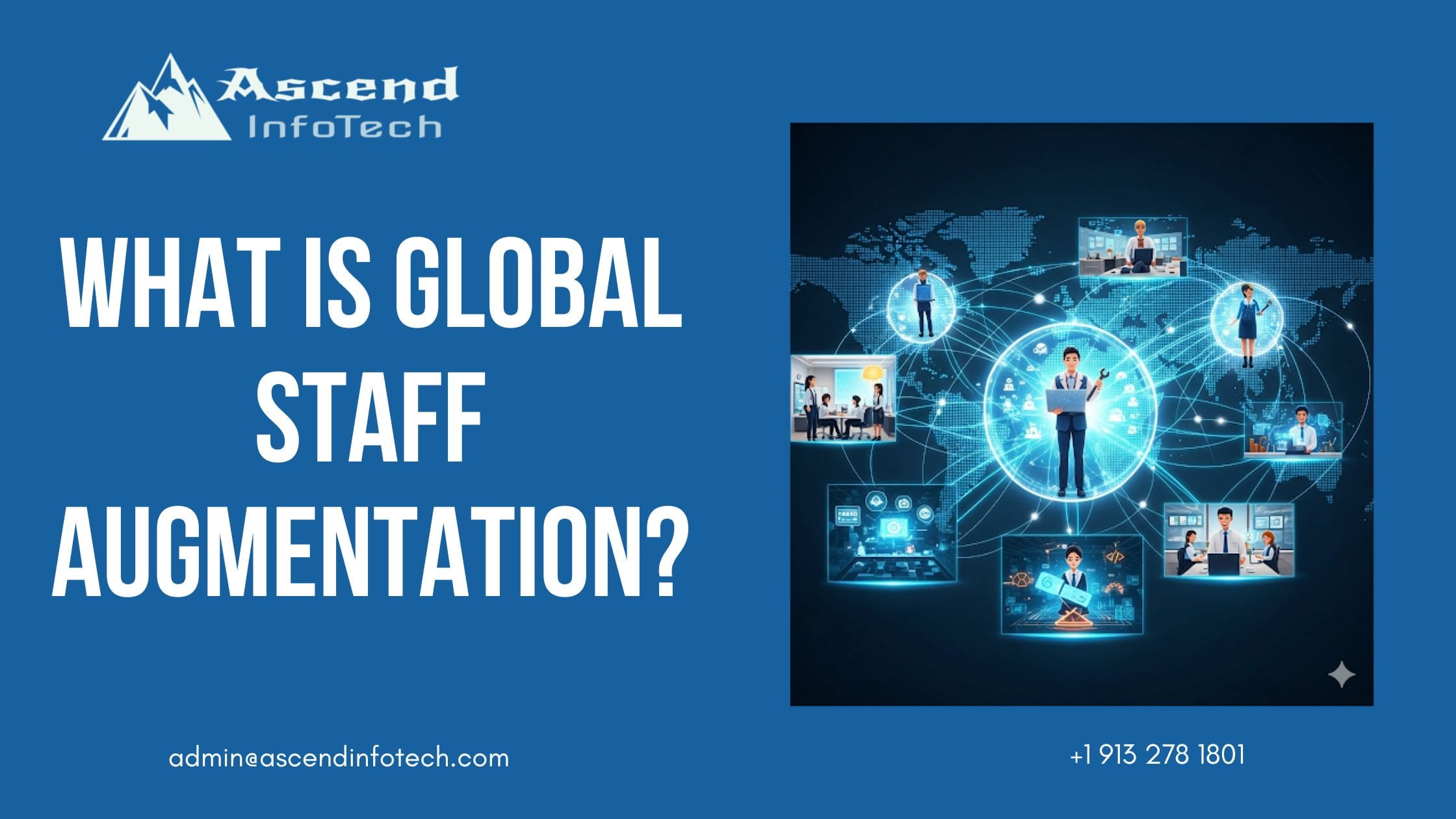
What is Global Staff Augmentation?
Businesses need to stay flexible and competitive in the quickly changing business environment of today. Whether it’s managing seasonal projects, growing a tech workforce, or meeting urgent deadlines, the need for specific skills frequently arises out of the blue. Global staff augmentation is starting to shift the game in this area.
Businesses can now tap into a global talent pool, bringing in the appropriate knowledge at the right time, rather than being restricted to employing locals.
Organizations can increase their workforce without going through the lengthy procedure of traditional recruitment by using global staff augmentation.
Saving money isn’t the only goal; maintaining an advantage in a global economy where talent spans national boundaries, gaining flexibility, and gaining access to specialized talents are also important.
Businesses of all sizes are using this strategy more and more to close gaps fast and concentrate on their main objectives.
What is Global Staff Augmentation?
Companies frequently require more talent rapidly in today’s dynamic business environment without having to go through the drawn-out hiring procedure. Global staff augmentation can help with this.
With the help of this flexible hiring approach, companies may access qualified individuals from all over the world and easily incorporate them into their current teams.
In contrast to outsourcing, which transfers control of a whole project, staff augmentation allows companies to retain control while addressing specific talent shortages. Whether for marketing, IT, or specialty positions, this strategy provides quicker scalability, cost savings, and access to a variety of expertise.
Global staff augmentation offers the ideal balance of talent and flexibility for both startups and large corporations, enabling them to remain competitive while concentrating on their core competencies.
How Global Staff Augmentation Works?
A simple yet effective strategy for companies to overcome talent gaps without making long-term hiring commitments is global staff augmentation.
Companies may swiftly bring in specialist professionals from anywhere in the world and incorporate them into their teams, eliminating the need for drawn-out recruitment cycles.
Here’s how it works step by step:
a. Finding talent gaps:
Recognize the particular abilities or positions that your present team lacks.
b. Collaborating with a staffing company:
Choose a reputable company with access to international talent pools.
c. Hiring and onboarding professionals who work remotely or internationally:
Choose and onboard the best candidates who fit the requirements of your project.
d. Integration with the current team:
Make sure that new hires fit in with your procedures and culture to guarantee smooth cooperation.
e. Continuous performance management:
Keep an eye on developments, offer constructive criticism, and sustain involvement to guarantee high output.
This method allows companies to scale swiftly, cut expenses, and remain flexible while keeping complete project control.
Benefits of Global Staff Augmentation
Global staff augmentation has become a potent answer for companies seeking to maintain agility in the rapidly evolving world of today.
It enables businesses to hire experts from around the world without the lengthy wait times and high expenses associated with traditional recruiting.
It provides access to fresh possibilities and methods of operation in addition to addressing talent shortages. Let’s look at some of the benefits:
1. Availability of a Skilled, Diverse Global Talent Pool
Global staff augmentation has allowed businesses to expand beyond local talent. Whether they are a data analyst in North America, a designer in Southeast Asia, or a software engineer in Eastern Europe, they can connect with highly qualified experts all around the world.
In addition to guaranteeing access to specialist knowledge, this diversity offers new viewpoints and creative methods to problem-solving.
2. Flexibility in Scaling Teams Up or Down
The needs of businesses are constantly changing. While some projects call for an abrupt rise in staff, others might need to be scaled back after reaching certain milestones.
This kind of flexibility is made possible by global staff augmentation, which enables companies to swiftly modify team sizes without incurring long-term obligations or the overhead expenses of permanent personnel.
3. Faster Hiring Compared to Traditional Recruitment
The lengthy procedures of job listings, interviews, onboarding, and training are common in traditional recruitment. Businesses may get around a lot of this and hire specialists who are ready to work in a fraction of the time via global staff augmentation.
When launching new projects or working under pressure to meet deadlines, this speed is essential.
4. Cost Savings and Efficiency
The costs of hiring full-time staff members can be expensive and include office space, training, benefits, and salary. Businesses can drastically reduce these costs while maintaining access to top talent by utilizing global staff augmentation.
Additionally, companies can typically obtain the same level of skill at a more affordable price by hiring from areas with lower labor expenses.
5. Focus on Core Business Functions
Business executives and internal teams may concentrate on their key competencies, which include growth strategies and core operations, when talent gaps are promptly and effectively filled.
Businesses may focus their efforts on innovation, customer service, and business growth rather than becoming bogged down by drawn-out hiring procedures or handling skill shortages.
Challenges and Considerations
Global staff augmentation provides flexibility and access to talent, but there are drawbacks as well that companies should be aware of.
Proactively addressing these issues can mean the difference between a positive and a negative experience.
1. Time zone differences
Coordinating across time zones is a common requirement when working with a multinational workforce. Although this enables almost constant productivity, if not handled effectively, it may also cause delays in decision-making and communication.
To guarantee smooth cooperation, businesses might need to set up overlapping working hours or make use of project management software.
2. Cultural and communication barriers
Although diversity is a strength of global teams, cultural differences can occasionally cause miscommunications. Progress might be slowed down by differences in communication patterns, work methods, or even differences in language.
Organizations should make investments in inclusive work environments, cultural sensitivity training, and clear communication techniques to get past this.
3. Data security and compliance
Businesses must abide by a number of data privacy rules and regulations, including the GDPR and local labor laws, when recruiting people abroad. If security measures are inadequate, sharing private data across borders raises the possibility of data breaches.
To reduce risks, it is crucial to use secure technologies, make sure contracts are appropriate, and collaborate with reliable suppliers.
4. Management and integration of remote teams
Hiring outside talent is one thing, but seamlessly incorporating them into current processes is quite another. It could be difficult for remote workers to relate to or feel like they belong with in-house staff.
To help remote workers feel like members of the team rather than outsiders, leaders should set up clear onboarding procedures, frequent check-ins, and collaborative activities.
Global Staff Augmentation vs. Outsourcing
Outsourcing and global staff augmentation are often mentioned as two common choices when companies search for flexible recruiting strategies. Despite their apparent similarities, both entail hiring outside talent.
They differ greatly in how they operate and how much control you have over your staff. Leaders can choose the model that best suits their needs by being aware of these distinctions.
1. Key Differences in Control, Management, and Accountability
a. Control:
The company maintains direct control over the expanded team when it uses global staff augmentation. These experts follow your procedures, equipment, and culture, functioning as an extension of your internal personnel.
However, outsourcing gives a third-party supplier complete control over the management and execution of a service or project.
b. Management:
Your managers supervise the daily operations of the international team with workforce augmentation, guaranteeing alignment with business objectives.
This duty is transferred to the service provider through outsourcing, so you are in charge of the outcomes rather than the personnel.
c. Accountability:
Since the augmented staff works closely with your team, accountability for global staff augmentation lies with your business.
In outsourcing, the vendor bears the majority of the responsibility; you count on them to deliver results in accordance with the contract.
2. Which Option Suits What Type of Business Needs?
a. Global Staff Augmentation Works Best When:
– You want complete control over the job process, but you also require specialized talent.
– You need more help to support your internal team without altering procedures because you’re growing swiftly.
– It’s critical to collaborate and align with your company’s culture.
b. Outsourcing Works Best When:
– Non-core operations (such as payroll, customer service, or IT helpdesk) should be fully delegated.
– You would rather not micromanage tasks than concentrate on results.
– There aren’t enough resources for your company to directly oversee more employees.
In summary, global staff augmentation is a superior option if you prefer flexibility and hands-on involvement.
Outsourcing might be a better option if your top goal is to free up internal resources and transfer accountability to a third-party specialist.
Future of Global Staff Augmentation
The future of global staff augmentation is being driven by how companies and workers adjust to a workplace that is changing quickly.
Businesses now perceive opportunities to hire the best personnel, wherever they may be in the world, rather than borders as barriers to hiring.
Three significant trends emerge from the ongoing evolution of work.
1. Remote-first and hybrid work trends
The real potential of international recruiting has been revealed by the trend toward remote and hybrid work. Today’s workers appreciate flexibility, and companies are learning that they don’t have to restrict their talent hunt to a single nation or city.
Businesses may access a worldwide talent pool and enable employees to work where they are most productive by prioritizing remote work.
Global staff augmentation is becoming a more alluring option as hybrid models enable teams to strike a balance between in-person cooperation and distant flexibility.
2. Increasing reliance on global workforce models
Businesses are always under pressure to stay cost-effective, scale operations swiftly, and innovate more quickly. That is precisely what global workforce models provide: access to a variety of skills, cultural viewpoints, and specialized knowledge that might not be available locally.
In order to stay competitive, more businesses are using global staff augmentation as a long-term strategy rather than only a short-term fix. In sectors like IT, healthcare, and digital services, where demand for specialized skills exceeds local supply, this tendency is especially noticeable.
3. Role of technology and platforms in bridging borders
The foundation of global collaboration is technology. Companies can easily integrate overseas talent into their teams thanks to secure cloud solutions, project management systems, and advanced communication technologies.
The employment procedure is also becoming more efficient thanks to platforms that link companies with pre-screened candidates worldwide.
The obstacles to working with international teams will continue to decrease as technology grows, like AI-powered hiring tools, automated onboarding, and real-time collaboration software.
Conclusion
More than just a hiring tactic, global staff augmentation is a clever approach for companies to reach people around the world, scale effectively, and maintain their competitiveness in a world that is changing quickly.
Companies can quickly adapt without sacrificing quality or expertise thanks to their ability to bridge skill gaps and provide flexibility.
At Ascend InfoTech, we think that flexibility and creating cross-border teams are key components of the workplace of the future.
Get in contact with us right now to begin your journey toward a more agile workforce if you’re prepared to investigate how global staff augmentation can benefit your company.
