







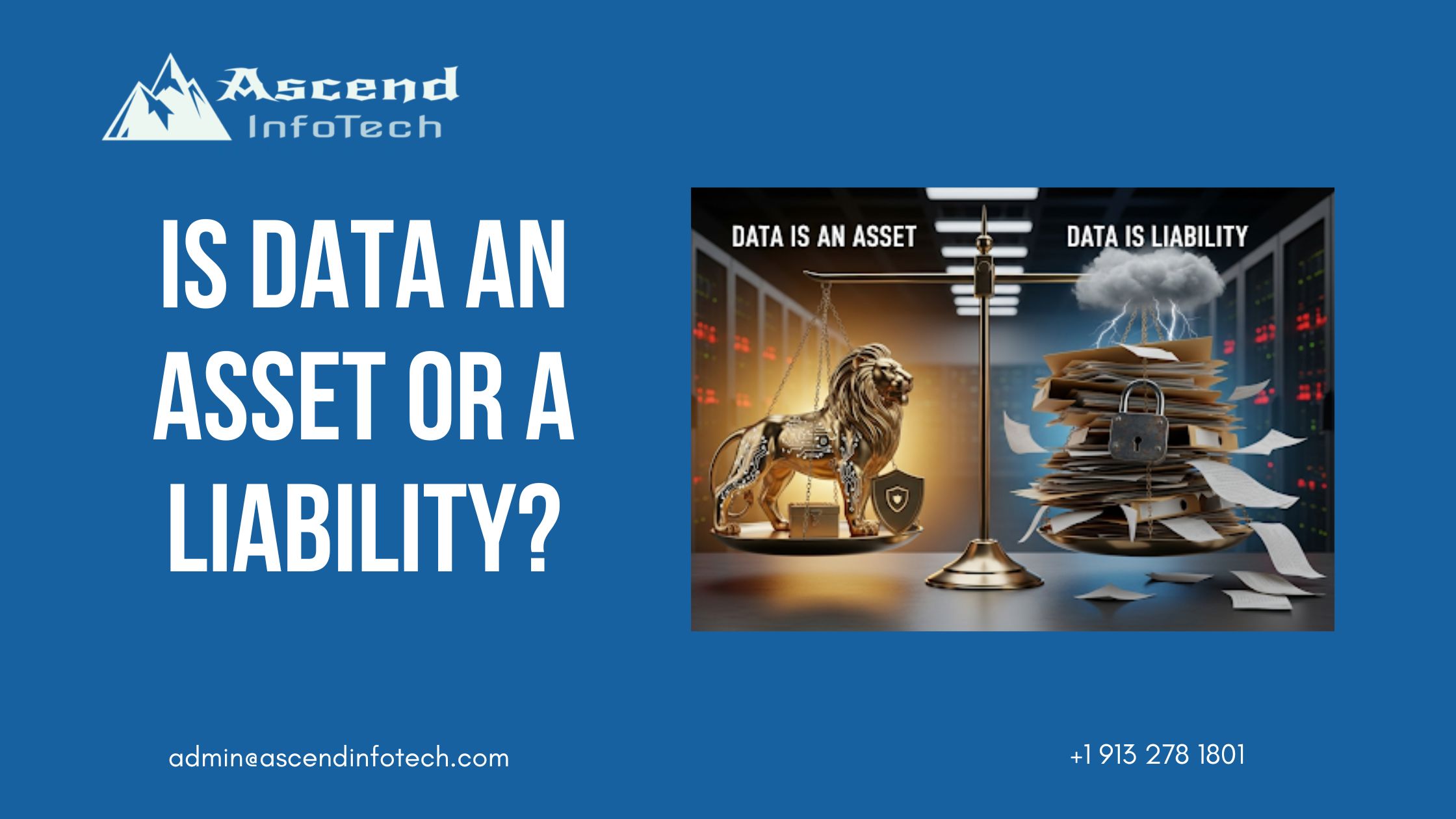
Is Data an Asset or a Liability?
Businesses in every sector consider data an asset that promotes innovation, competitive advantage, and decision-making in today’s digital-first economy. Businesses are using data to find previously missed opportunities, such as operational efficiency and customer insights.
But the difficulties also increase in connection with the amount and complexity of data. Information that is poorly managed or handled can put businesses at risk for security breaches, noncompliance, and harm to their reputation.
For modern businesses, this poses a crucial query: Is data an asset or a liability? Understanding how businesses can use data responsibly while reducing any potential drawbacks requires investigating this balance.
When Data Is an Asset?
When data is gathered, handled, and used efficiently to produce measurable value for a company, it becomes an invaluable asset. Businesses that strategically handle data gain an advantage in today’s competitive environment by turning unprocessed data into insights that can be put to use. Effective use of data promotes innovation, efficiency, and growth in addition to providing information.

In the following situations, data becomes a true asset:
1. Informed Decision-Making
Leaders can base their strategies on facts, patterns, and predictive models rather than relying completely on guesswork when they have access to high-quality data.
2. Understanding Customers
Businesses can build personalised experiences and increase customer loyalty by using data to analyze customer behaviour, preferences, and needs.
3. Operational Efficiency
By detecting shortcomings, data enables businesses to cut expenses, minimise waste, and streamline procedures.
4. Innovation and Growth
Businesses use data to predict demand, identify market opportunities, and create new goods and services that meet consumer demands.
5. Risk management
By identifying possible problems before they become more serious, data-driven monitoring and predictive analytics tools can reduce financial and reputational damage.
E-commerce companies, for instance, use browsing and purchase history to make product recommendations, increasing sales and improving customer satisfaction. Similarly, manufacturers maximise productivity and avoid downtime by using real-time data from networked devices.
When data is timely, accurate, and in line with corporate objectives, it eventually turns into an asset. Gathering a tonne of data is not enough; you also need to turn that data into insights that provide real value. Businesses that are successful in doing so put themselves in a position to prosper in a world that is becoming more and more data-driven.
When Data Becomes a Liability?
Even though data is often viewed as an asset, if it is not handled properly, it can also turn into a liability. Beyond just technical issues, data mismanagement poses risks that can have a direct effect on long-term company viability, brand reputation, and financial stability.
One of the most prevalent issues is data overload. Massive volumes of data are gathered by organisations, but their effective use is hampered by inadequate governance and organisational structure. It complicates systems and raises storage expenses rather than adding value.
Additionally, data becomes a liability when it puts a company at risk for security and compliance issues:
1. Regulatory Penalties
Strict guidelines on the processing, sharing, and storage of data are enforced by laws like the CCPA, GDPR, and HIPAA. Serious fines and legal action may follow noncompliance.
2. Data Breaches
Breaching of data can result in identity theft, legal action, and long-term damage to one’s reputation if private client or financial information ends up in the wrong hands.

3. Outdated or Inaccurate Data
Poor customer experiences and wasted investments can result from decisions based on inaccurate or incomplete data.
4. Ethical Concerns
Even accidentally using someone else’s personal information might hurt their credibility and trust.
In the end, the quality of data protection and governance determines its value. What might have been a strategic advantage soon turns into a liability in the absence of clear policies, security measures, and quality controls. Data must therefore be viewed by businesses as a responsibility to manage rather than merely a resource to be exploited.
How to Turn Data into an Asset?
To actually turn data into a high performing asset, Data must be treated as a strategic resource that produces quantifiable business results in order to be transformed into a true asset. This is more than just collecting and keeping information. Businesses that are successful in this transition take a methodical approach to guaranteeing that data is reliable, safe, and useful.
Also Read: How to Treat Data as an Asset?
Businesses must understand that not all data is the same and not all data is an asset. The foundation of transforming information into a competitive advantage is identifying the appropriate data, whether it be financial insights, operational metrics, or customer behavior. Businesses can maximize it by utilizing the following tactics after it has been identified:
1. Establish robust data governance
Reliability and trust are ensured by having clear policies for data ownership, quality, and compliance.
Also Read: Build a Scalable Data Governance Framework
2. Invest in modern infrastructure
Real-time analytics tools, data warehouses, and cloud platforms enable scalable and accessible information.
3. Prioritise data quality first
Clean, consistent, and accurate data reduces errors and improves decision-making.
4. Connect data from different systems
Departments can work together and share insights when silos are broken down.
5. Use AI and advanced analytics
Machine learning and predictive models reveal trends and insights that conventional analysis might miss.

Also Read: Role of AI in Data Asset Management
6. Establish a data-driven culture
By empowering staff members at all levels and teaching teams to rely on insights rather than gut feelings.
Businesses turn raw data into an important asset that supports resilience, growth, and innovation by fusing governance, technology, and culture. When handled properly, data transforms from an operational byproduct into one of the most potent resources a business can possess.
Conclusion
In today’s business environment, data has two personalities: it can be an invaluable asset if handled well, or it can become an expensive liability if ignored. The way that organisations approach strategy, security, and governance makes a difference. Companies can minimise risks and maximise chances for expansion, innovation, and trust by proactively evaluating their data practices.
At Ascend InfoTech, we assist businesses in turning information into a real strategic asset. The time has come to assess your data strategy, fill in the gaps, and realize its full potential. Begin converting liabilities into assets by collaborating with Ascend InfoTech right now to create a more intelligent, data-driven future.
