







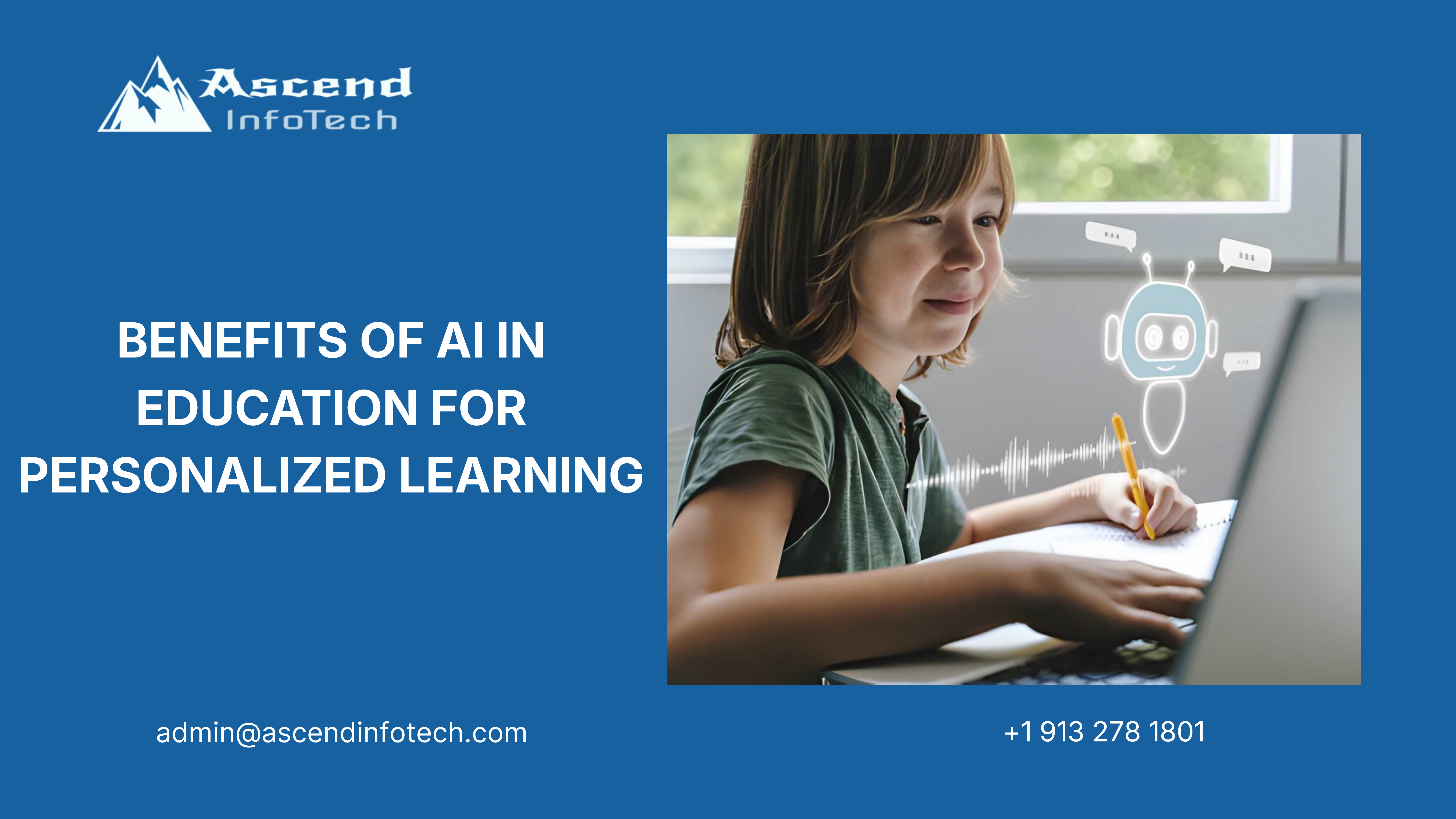
Benefits of AI in Education for Personalized Learning
Education has never been a one-size-fits-all solution. Every student learns differently, processes information at their own pace, and has unique strengths and weaknesses. Yet for decades, classrooms have operated on a standardized model — same lessons, same pace, same tests for everyone. That’s changing fast, and AI is leading the charge.
The benefits of AI in education go far beyond just automating paperwork or grading assignments. We’re talking about a complete reimagining of how students learn, how teachers teach, and how schools operate. Let’s break it all down.
What Does AI Actually Do in a Classroom?
Before we dive into the advantages, it’s worth understanding what artificial intelligence in education actually looks like in practice.
AI in education refers to the use of smart algorithms, machine learning, and data-driven systems to enhance learning experiences. Think of tools like adaptive learning platforms, AI-powered tutors, intelligent content creation systems, and predictive analytics that help teachers identify struggling students before they fall behind.
It’s not science fiction anymore. Millions of students around the world are already benefiting from AI-powered tools every single day.
The Real Benefits of AI in Education

Artificial intelligence is no longer a buzzword reserved for tech conferences — it’s actively reshaping how students learn and how educators teach. From kindergarteners practicing reading to college students tackling complex subjects, AI is quietly working behind the scenes to make education smarter, faster, and more effective. The benefits of AI in education span across every level of learning, every type of student, and every corner of the globe. Here’s a closer look at what’s really changing.
1. Personalized Learning Paths — The Biggest Game Changer
Here’s the thing about traditional education — if you’re a fast learner, you’re often bored waiting for the class to catch up. If you’re a slow learner, you’re constantly scrambling to keep pace. AI fixes this.
One of the most significant benefits of AI in education is its ability to create truly personalized learning experiences. AI-powered platforms analyze how a student interacts with content — what they understand quickly, where they struggle, how much time they spend on each concept — and then dynamically adjust the curriculum to match their individual pace and learning style.
This is what personalized learning through AI truly looks like — adaptive, responsive, and student-centric.
2. Instant Feedback That Actually Helps
In a typical classroom, a student submits an assignment and waits days — sometimes a week — for feedback. By then, the concept has moved on and the feedback loses much of its value.
AI changes this completely. With AI-powered tools, students receive instant, detailed feedback on their work. Whether it’s a grammar check, a math problem walkthrough, or a writing suggestion, the feedback is immediate and actionable.
This kind of real-time feedback loop is one of the strongest advantages of AI in education because it keeps students in an active learning cycle. They make a mistake, they understand why, and they correct it — all within minutes.
Must Read: Why AI Should Not Be Used in Schools for Effective Learning?
3. How AI Helps Students Who Need Extra Support
Let’s talk about the students who often get left behind — those with learning disabilities, language barriers, or those who are simply too shy to raise their hand in class.
This is where understanding how AI helps students becomes deeply meaningful.
(a) AI-powered speech-to-text tools support students with dyslexia or writing difficulties.
(b) Language translation features help non-native speakers access content in their preferred language.
(c) AI tutors are available 24/7, meaning a student can revisit a difficult concept at 10 PM without waiting for the next class.
(d) Intelligent tutoring systems can detect emotional cues like frustration or disengagement and adjust content accordingly.
For students who struggle in traditional environments, AI isn’t just a helpful tool — it can be genuinely life-changing.
4. Relieving the Burden on Teachers
Teachers are overworked. Period. Between lesson planning, grading, administrative tasks, and managing classroom behavior, there’s barely any time left for what they actually love — teaching.
AI steps in here as well. Automated grading systems handle multiple-choice tests and even essay evaluations. Smart scheduling tools manage timetables. Data dashboards give teachers a clear picture of each student’s progress without manually tracking dozens of spreadsheets.
So, can AI replace teachers? Well, the role of AI in education isn’t to replace teachers — it’s to give them their time back so they can focus on mentoring, inspiring, and building genuine relationships with their students. That human connection is something no algorithm can replicate.
5. Early Identification of Learning Gaps
One of the most underrated benefits of AI in education is its predictive capability. AI systems can analyze patterns in student behavior and performance to flag potential issues before they become serious problems.
Imagine a student who starts missing assignments, spending less time on reading exercises, and scoring lower on quizzes. A teacher juggling 40 students might not notice immediately. An AI system will flag it the same week.
This early intervention model means students get help faster, dropout rates can be reduced, and educators can make data-backed decisions rather than relying on guesswork.
6. Making Quality Education Accessible Everywhere
Not every student has access to quality teachers, well-funded schools, or private tutoring. This is a global problem, and AI for student learning is one of the most promising solutions.
With a smartphone and an internet connection, a student in a rural village can now access the same quality of personalized instruction as a student in a top city school. AI-powered platforms don’t discriminate based on geography, socioeconomic status, or school funding.
This democratization of education is perhaps one of the most powerful long-term benefits of AI in education — leveling the playing field for learners everywhere.
7. Smarter Content Creation and Curriculum Design
AI isn’t just helping students — it’s helping educators build better content. AI tools can:
(a) Analyze which topics students find most difficult and suggest improvements to how content is presented.
(b) Generate practice questions and quizzes tailored to specific learning objectives.
(c) Translate and localize educational content for diverse student populations.
(d) Summarize complex texts into digestible formats for younger learners.
This means the quality of teaching material itself improves over time as AI learns what works and what doesn’t.
The Future of AI in Education

If the present state of AI in education is impressive, the future is extraordinary.
The future of AI in education points toward fully immersive, hyper-personalized learning environments. Think AI tutors that don’t just adapt content but also recognize when a student is anxious before an exam and offer calming techniques. Imagine virtual reality classrooms powered by AI where students can explore ancient Rome or conduct chemistry experiments in a simulated lab — all safely, affordably, and from home.
We’re also moving toward lifelong learning systems where AI tracks a person’s educational journey from kindergarten through their professional career, offering personalized upskilling opportunities based on industry trends and individual goals.
AI will also make assessments more meaningful. Instead of standardized tests that measure memorization, AI can evaluate critical thinking, creativity, and problem-solving in real time — giving a much more accurate picture of a student’s true abilities.
The benefits of AI in education will only grow as the technology becomes smarter, more accessible, and more integrated into everyday learning environments.
Challenges Worth Acknowledging
It’s only fair to address the other side too. Concerns around data privacy, screen time, reduced human interaction, and the digital divide are valid and need thoughtful solutions. AI in education works best when it complements human teaching — not when it tries to replace it.
Schools, governments, and ed-tech companies need to work together to ensure AI tools are ethical, inclusive, and genuinely student-focused.
Final Thoughts
The benefits of AI in education for personalized learning are not just promising — they’re already here and making a real difference in classrooms around the world. From adaptive learning paths to instant feedback, from supporting struggling students to empowering teachers with better data, AI is reshaping education in ways that were unimaginable even a decade ago.
The goal has always been simple: help every student learn better. AI is finally giving us the tools to make that goal a reality — not for the top students in the best schools, but for every learner, everywhere.
The future of learning is personal, intelligent, and powered by AI. And honestly? That’s exciting.
FAQs
AI personalizes learning, provides instant feedback, identifies learning gaps early, supports struggling students, and reduces teacher workload — making education more effective and accessible for everyone.
AI adapts content to each student’s pace and style, offers 24/7 tutoring support, gives real-time feedback, and uses data to ensure no student falls behind unnoticed.
No. AI supports teachers by handling repetitive tasks, but the human connection, mentorship, and inspiration a great teacher provides cannot be replicated by any algorithm or machine.
When implemented responsibly, yes. Schools must ensure strong data privacy policies and age-appropriate usage to keep students safe while benefiting from AI tools.
The future includes immersive VR classrooms, hyper-personalized AI tutors, lifelong learning systems, and smarter assessments that measure real skills beyond rote memorization.