







Data Architecture Explained: Principles, Types, and Best Practices
Data today is one of the most valuable resources a business can have, but without the right structure it quickly becomes overwhelming and difficult to use. This is where data architecture comes in. At its foundation, data architecture serves as the blueprint for how an organization collects, stores, manages, and utilizes its data. It ensures seamless information flow, maintains security, and makes data readily accessible to the right people.
In today’s fast-moving, data-driven world, businesses can no longer rely on scattered spreadsheets or disconnected systems. A strong data architecture helps organizations unlock insights, support better decision-making, and build a foundation for innovation with analytics, automation, and AI.
This guide will walk you through the core principles of effective data architecture, outline the different models businesses can adopt, and highlight best practices for building systems that are scalable and ready for the future.
What is Data Architecture?
Data architecture is the framework that defines how an organization collects, stores, manages, and uses data. It works like a blueprint, ensuring information flows seamlessly from its source to where it is needed.
In organizations, strong data architecture connects different systems, reduces silos, and makes data accessible for decision-making. Without it, businesses risk dealing with inconsistent information, duplication, and inefficiencies.
It is useful to see how it differs from related concepts. Data modeling is about structuring individual datasets, while data governance sets the policies and rules for responsible data management. Data architecture ties these elements together by providing an overarching structure that ensures security, scalability, and consistency.
A solid data architecture helps businesses achieve accurate insights, maintain compliance, and stay adaptable in a rapidly changing digital environment. In essence, it turns raw data into a powerful asset that fuels growth and innovation.
Core Principles of Data Architecture

A strong data architecture is built on a few core principles that guide how information is managed and used across an organization.
1. Data as an Asset: Data should be treated as a valuable business resource, just like finances or physical infrastructure. When handled properly, it becomes a driver of growth and innovation.
2. Accessibility: Data must be easy to find, access, and use by the right people at the right time. This ensures teams can make informed decisions quickly.
3. Scalability and Flexibility: As organizations grow, their data systems must adapt. A good architecture supports expansion without major disruptions.
4. Security and Compliance: Protecting sensitive information and following regulations such as GDPR and HIPAA is non-negotiable. Strong security builds trust and reduces risk.
5. Integration: Data should flow seamlessly across systems and applications to avoid silos and support collaboration.
6. Data Quality and Consistency: Reliable decisions depend on accurate, consistent, and clean data. Maintaining high quality ensures that insights can be trusted.
Together, these principles provide the foundation for managing data effectively and preparing businesses for long-term success.
Types of Data Architecture
Every organization manages data differently, and the right architecture depends on the size of the business, the type of data being used, and long-term goals. Below are the main types of data architecture, each with unique strengths and challenges.
1. Centralized Data Architecture
All data is collected and stored in one central system. This makes management, governance, and security easier, but as the amount of data grows, it can create performance bottlenecks and limit flexibility.
2. Decentralized or Distributed Data Architecture
Here, data is stored across multiple systems or locations. It improves resilience and reduces dependency on a single system, but maintaining consistency and avoiding duplication can be more difficult.
3. Data Warehouse Architecture
A warehouse is designed to store structured, historical, and transactional data. It supports reporting, dashboards, and traditional business intelligence. While reliable, it is less suited for handling unstructured or real-time data.
4. Data Lake Architecture
A data lake stores raw, semi-structured, and unstructured data at scale. This makes it ideal for advanced analytics, AI, and machine learning. However, without proper governance, it can become a “data swamp.”
5. Data Lakehouse (Hybrid)
A lakehouse combines the flexibility of a data lake with the structured querying power of a data warehouse. It supports multiple workloads, from BI reporting to predictive analytics, in one unified environment.
6. Event-Driven or Real-Time Architecture
This approach processes and analyzes data as it is created. It is essential for industries like finance, e-commerce, and IoT, where real-time insights drive faster decision-making and responsiveness.
7. Cloud-Native Data Architecture
Modern organizations are increasingly adopting cloud-native designs. These architectures are scalable, cost-effective, and integrate well with advanced analytics and AI tools. They also support hybrid and multi-cloud strategies.
Choosing the right architecture depends on whether a business values speed, scalability, cost-efficiency, or advanced analytics capabilities. Many organizations today adopt a hybrid approach to get the best of multiple models.
Key Components of Data Architecture
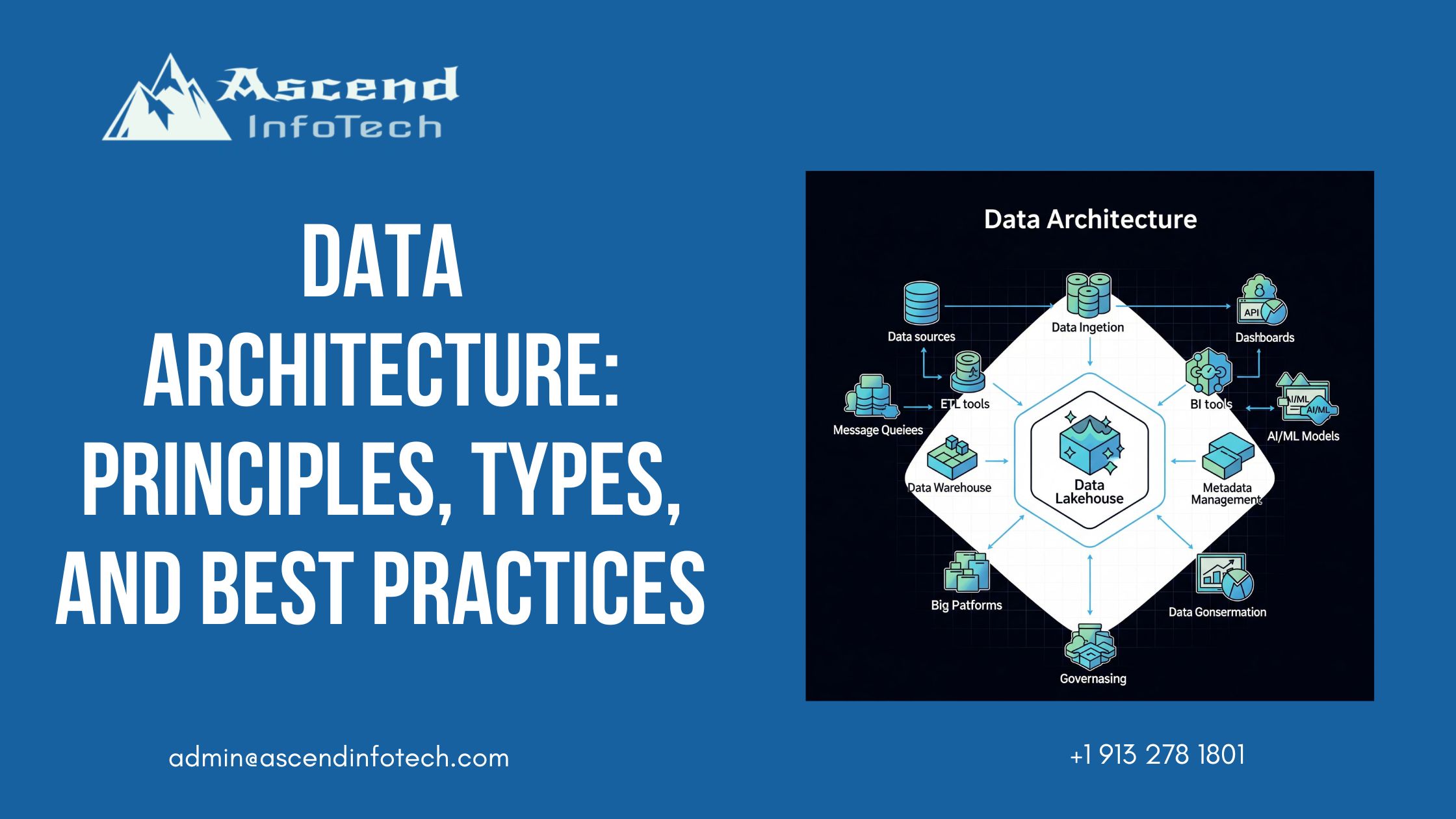
A strong data architecture is made up of several interconnected components. Each plays a unique role in ensuring that data flows smoothly from its source to its end use while remaining accurate, secure, and accessible.
1. Data Sources
Data can originate from many places—internal systems like CRMs and ERPs, external sources such as third-party APIs, or modern inputs like IoT devices and streaming platforms. Identifying and managing these sources is the first step in building a reliable architecture.
2. Data Ingestion
Once sources are identified, data must be brought into the system. This is done through ETL (Extract, Transform, Load), ELT (Extract, Load, Transform), APIs, or data pipelines. Efficient ingestion ensures data arrives in usable form and on time.
3. Data Storage
Storage solutions include traditional databases, data warehouses for structured information, and data lakes for raw or semi-structured data. Modern businesses often use a combination depending on their needs.
4. Data Processing
Processing refers to cleaning, transforming, and organizing data to make it ready for analysis. It can be done in batches for large datasets or in real time when instant insights are required, such as fraud detection or live monitoring.
5. Metadata and Master Data Management (MDM)
Metadata provides context, helping users understand what data means and where it comes from. MDM ensures consistency in core business data (like customer or product records) across all systems.
6. Data Governance Layer
Governance defines ownership, policies, and compliance requirements. It ensures data security, regulatory alignment, and accountability while preventing misuse or errors.
7. Data Consumers
Finally, data is delivered to consumers—business intelligence (BI) tools, AI and machine learning models, dashboards, or decision-makers. These consumers rely on accurate, timely, and well-structured data to generate insights.
Together, these components form the backbone of any data architecture, enabling businesses to transform raw information into actionable knowledge.
Benefits of a Strong Data Architecture
A well-designed data architecture offers numerous advantages that help organizations operate efficiently and make smarter decisions.
1. Improves Decision-Making
Accurate, well-structured data ensures that business leaders have reliable insights at their fingertips. This enables informed decisions, reduces guesswork, and helps organizations respond quickly to changing market conditions.
2. Enhances Operational Efficiency
By streamlining data flows and reducing silos, strong architecture minimizes duplication and errors. Teams dedicate less time to searching for information and more time turning insights into actionable business outcomes.
3. Strengthens Compliance and Data Security
A solid architecture includes governance and security measures, helping businesses meet regulatory requirements such as GDPR or HIPAA. This helps minimize the risks of data breaches and regulatory non-compliance
4. Supports Innovation with AI and Analytics
Modern technologies such as AI, machine learning, and advanced analytics depend on well-structured, high-quality data. A strong architecture provides the foundation needed to experiment, innovate, and gain competitive advantages.
5. Provides Scalability for Future Growth
As organizations grow, their data needs evolve. A robust data architecture is flexible and scalable, allowing businesses to integrate new data sources and technologies without disrupting operations.
Investing in strong data architecture transforms raw data into a strategic asset, empowering organizations to drive growth, improve efficiency, and stay ahead in a data-driven world.
Best Practices for Designing Data Architecture
Creating an effective data architecture requires strategic planning and alignment with overall business goals. Following best practices helps organizations build systems that are scalable, secure, and easy to maintain.

1. Start with Business Goals, Not Technology
Begin by understanding what the organization wants to achieve. Technology choices should support business objectives rather than dictate them. A clear goal-driven approach ensures the architecture delivers real value.
2. Choose the Right Architecture Type
Select an architecture model that aligns with your data needs, whether it’s centralized, decentralized, a data warehouse, lake, or hybrid approach. The right choice reduces complexity and improves efficiency.
3. Prioritize Security and Compliance
Build security measures and compliance requirements into the process from the very beginning. Protect sensitive data and ensure adherence to regulations such as GDPR, HIPAA, or industry-specific standards.
4. Standardize Data Definitions and Formats
Consistency is critical. Define standard formats and naming conventions for data to avoid confusion, improve integration, and maintain quality across systems.
5. Adopt Cloud and Hybrid Models
Cloud or hybrid architectures provide flexibility, scalability, and cost efficiency. They allow organizations to adapt quickly to changing demands without overhauling existing infrastructure.
6. Enable Self-Service Analytics
Empower business teams with access to the data they need through dashboards or BI tools. Self-service analytics speeds up decision-making and reduces reliance on IT for routine queries.
7. Regularly Audit and Optimize Architecture
Data needs evolve over time, so continuously monitor, evaluate, and improve your architecture. Regular audits help identify bottlenecks, reduce redundancies, and ensure the system remains efficient and future-ready.
Following these best practices ensures that your data architecture is not only robust and secure but also adaptable, supporting business growth and innovation over the long term.
Challenges in Implementing Data Architecture
While a strong data architecture offers significant benefits, implementing it comes with its own set of challenges. Understanding these obstacles can help organizations plan more effectively and avoid common pitfalls.
1. Data Silos and Legacy Systems
Many organizations still rely on older systems that do not communicate well with newer platforms. This creates silos, making it difficult to integrate data across the organization and maintain a single source of truth.
2. Cost and Complexity of Migration
Transitioning to a modern data architecture often involves significant investments in technology, infrastructure, and training. Migration can be complex, requiring careful planning to avoid disruption and data loss.
3. Lack of Skilled Data Professionals
Building and maintaining a robust architecture requires expertise in areas like data engineering, governance, and analytics. A shortage of skilled professionals can slow down implementation and reduce effectiveness.
4. Balancing Security with Accessibility
Organizations must protect sensitive data while ensuring it remains accessible to the right users. Finding the right balance between security and usability is often a difficult challenge.
5. Keeping Up with Evolving Technologies
Data technologies evolve rapidly, from cloud-native solutions to AI-driven analytics. Staying updated and adopting the right tools without causing disruption can be difficult for many businesses.
Recognizing these challenges early allows organizations to address them proactively, ensuring that their data architecture is efficient, secure, and aligned with business goals.
The Future of Data Architecture
Data architecture is evolving rapidly as organizations seek faster, smarter, and more flexible ways to manage information. The future of this field is being shaped by several key trends.
1. Rise of AI-Driven Data Management in data architecture
Artificial intelligence is increasingly used to automate data organization, quality checks, and even decision-making processes. AI-driven tools help reduce manual effort, improve accuracy, and provide predictive insights.
2. Growing Importance of Real-Time Streaming Architectures
Businesses are moving toward architectures that process data in real time. Streaming data from IoT devices, financial transactions, or e-commerce platforms allows organizations to respond instantly, enhancing customer experiences and operational efficiency.
3. Cloud-Native and Serverless Data Platforms
Cloud-native solutions offer scalability, flexibility, and cost savings. Serverless architectures remove the need for extensive infrastructure management, allowing organizations to focus on analytics and innovation rather than maintenance.
4. Greater Focus on Data Mesh and Data Fabric
Modern enterprises are embracing data mesh and data fabric strategies to effectively manage complex and distributed data environments. These frameworks promote decentralized ownership, better governance, and seamless integration across systems.
5. Automation in Governance and Quality Checks
Automation tools are being used to monitor data quality, enforce policies, and maintain compliance. This ensures that data remains reliable and secure even as volumes and complexity grow.
Together, these trends point to a future where data architecture is more intelligent, adaptable, and business-focused. Organizations that embrace these changes will be better positioned to leverage data as a strategic asset for growth and innovation.
Conclusion
A solid data architecture forms the foundation of every modern organization. It ensures that data flows seamlessly, remains secure, and is accessible for decision-making, analytics, and innovation. By treating data as a strategic asset rather than just an operational necessity, businesses can unlock its full potential and gain a competitive edge.
At Ascend InfoTech, we believe that a strong data architecture is key to long-term growth and success. Organizations that invest in building scalable, flexible, and secure data systems can not only improve efficiency but also empower their teams with actionable insights.
Frequently Asked Questions
Data architecture is the blueprint that defines how an organization collects, stores, manages, and uses data. It ensures data flows efficiently, remains secure, and supports decision-making across the business.
The main types include Centralized, Decentralized/Distributed, Data Warehouse, Data Lake, Data Lakehouse (Hybrid), Event-Driven/Real-Time, and Cloud-Native architectures. Each type serves different business needs and workloads.
Data modeling focuses on designing the structure of specific datasets, while data architecture provides the overall framework that integrates data, governance, storage, and processing across an organization.
A robust data architecture improves decision-making, enhances operational efficiency, ensures compliance and security, supports advanced analytics and AI, and provides scalability for future growth.
Key best practices include aligning architecture with business goals, choosing the right architecture type, prioritizing security and compliance, standardizing data formats, adopting cloud or hybrid models, enabling self-service analytics, and regularly auditing and optimizing the system.